
Most manufacturers recommend replacing a serpentine belt somewhere between sixty thousand and one hundred thousand miles, but that range is really just a starting point rather than a firm rule. Actual replacement timing depends heavily on your specific vehicle, the belt’s material and condition, what your manufacturer specifically recommends, and the driving conditions your car actually experiences, which means two vehicles of the same age and mileage can genuinely need a new belt at very different times.
What The Serpentine Belt Actually Powers
The serpentine belt is a single, long belt that winds through your engine bay, connecting the crankshaft to several critical components including the alternator, power steering pump, air conditioning compressor, and often the water pump as well, depending on the vehicle. Rather than each of these systems having its own separate belt the way older vehicles sometimes did, one serpentine belt handles all of them simultaneously, which is efficient but also means a single belt failure affects multiple systems at once.
Why This Belt Matters So Much
Because the serpentine belt powers so many essential systems, its condition affects far more than just one component. A worn or damaged belt can cause your alternator to charge inconsistently, your power steering to feel heavier than normal, your AC to stop functioning, and in vehicles where the belt also drives the water pump, your cooling system to stop circulating coolant properly. This last scenario is particularly serious, since a water pump that stops turning can lead to overheating within just a few minutes of continued driving.
What Happens If The Belt Breaks While Driving
A serpentine belt failure while driving is not a minor inconvenience, it typically causes an immediate and noticeable loss of power steering assist, making the wheel suddenly much harder to turn, along with the battery warning light illuminating since the alternator stops charging. If the belt also drives your water pump, the temperature gauge will begin climbing quickly since coolant is no longer circulating, and continuing to drive under these conditions risks serious engine damage from overheating. A broken belt essentially means multiple systems fail simultaneously, which is part of why belt condition deserves attention well before a complete failure ever happens.
Why Replacement Intervals Vary So Much Between Vehicles
Manufacturer recommendations differ meaningfully from one vehicle to another, and checking your specific owner’s manual is always more reliable than relying on a generic industry average. Belt material matters too, since modern EPDM rubber compounds generally last longer than older neoprene belts did, sometimes extending well past one hundred thousand miles under good conditions, while a lower quality replacement belt might wear out considerably sooner regardless of the vehicle it is installed on.
Driving conditions play a significant role as well. Vehicles that regularly operate in extreme heat, extensive stop and go traffic, or under heavy accessory loads, air conditioning running constantly, for example, tend to experience faster belt wear than vehicles driven primarily in milder conditions with lighter loads. Austin’s combination of intense summer heat and the increasingly dense traffic that has come with the city’s rapid growth means local drivers often place more cumulative stress on a serpentine belt than the same vehicle might experience in a smaller, cooler city, which is worth keeping in mind when deciding whether to lean toward the earlier or later end of a manufacturer’s recommended range.
Signs Your Belt Needs Inspection Or Replacement
A high pitched squealing noise, particularly noticeable when starting the engine or when accessories like the AC or power steering are under load, is one of the most common early signs of a worn or slipping belt. Visible cracking along the ribbed side of the belt, glazing that gives the surface a shiny, hardened appearance, or fraying edges are all signs that inspection is worth doing sooner rather than later, even if the belt has not yet reached the mileage typically associated with replacement.
A belt that appears loose, with more give than it should have when pressed firmly with a finger, can indicate a worn tensioner rather than the belt itself, though both should be inspected together since a failing tensioner can accelerate wear on an otherwise healthy belt. Reduced power steering assist, inconsistent AC performance, or a battery warning light that appears intermittently can all indicate a slipping belt that is not maintaining consistent contact with the pulleys it drives, even before it shows obvious visible damage.
A chirping noise that comes and goes, particularly noticeable during cold starts or in damp conditions, is another pattern worth mentioning to a technician, since this specific kind of intermittent noise often points toward a belt or pulley alignment issue that a simple visual inspection might not immediately reveal. Describing exactly when a noise occurs, rather than just that a noise exists, can help a mechanic narrow down the cause more quickly.
Maintenance Tips That Help Extend Belt Life
Having your belt visually inspected during routine oil changes, rather than waiting for a scheduled major service interval, gives you regular opportunities to catch developing wear before it becomes a bigger problem. Confirming that the belt tensioner and any idler pulleys are in good condition matters just as much as the belt itself, since these components maintain the proper tension that keeps the belt from slipping or wearing unevenly.
Using a quality replacement belt rather than the cheapest available option tends to pay off over the life of the part, particularly for drivers in demanding conditions like Austin’s combination of heat and increasingly heavy traffic. If you have experienced a starting issue that seemed connected to an electrical or charging problem, our guide on the top 10 reasons your car won’t start and how to get back on the road covers a range of causes, some of which can trace back to a serpentine belt that has already started slipping or failing.
Why A Mobile Mechanic Fits This Kind Of Inspection Well
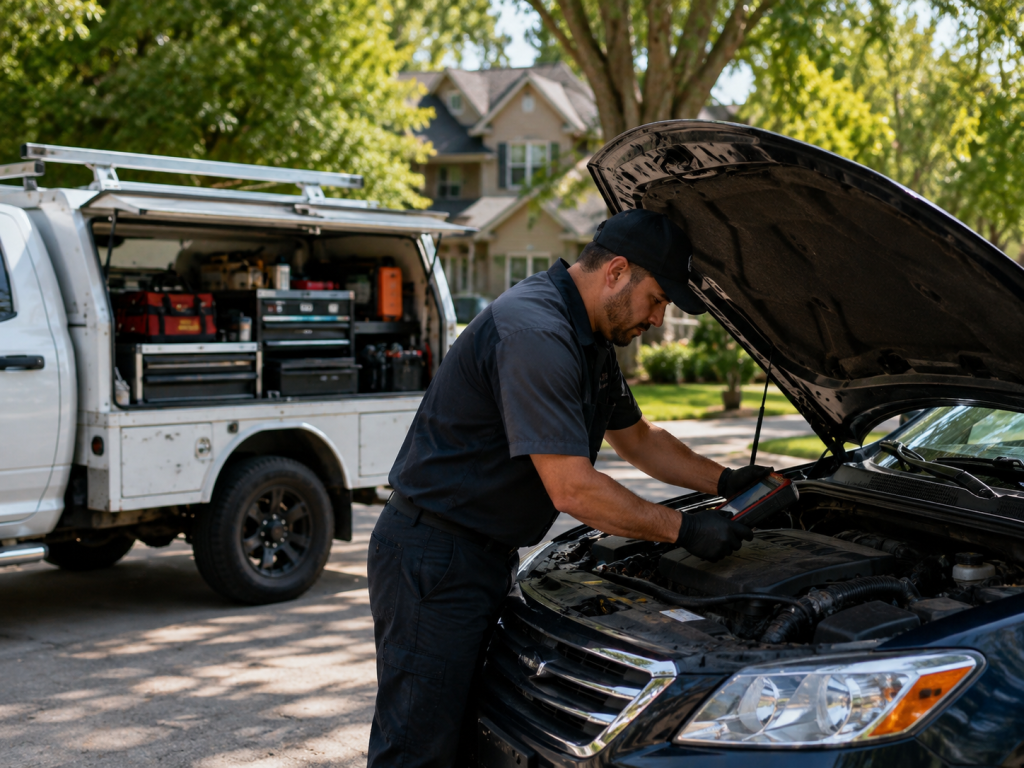
A serpentine belt inspection is a quick, straightforward check that does not require a full shop visit, and having a technician come to your home or workplace to look at belt condition alongside other routine maintenance items saves you a separate trip for something that only takes a few minutes to evaluate properly. A mobile mechanic can also handle the replacement itself on the spot if the belt is found to be worn, avoiding the inconvenience of scheduling a second appointment.
We covered the broader advantages of this approach in our article on why mobile mechanics are better than traditional auto shops in Austin, which explains how convenience and flexible scheduling come together, particularly useful for a quick but important check like this one.
Do Not Wait For A Complete Failure
A serpentine belt is easy to overlook until it actually fails, but the consequences of that failure, from lost power steering to a rapidly overheating engine, make it worth paying attention to well before that point. Checking for visible wear, listening for unusual noises, and following your manufacturer’s recommended interval as a starting point rather than an absolute deadline are all reasonable ways to stay ahead of a belt related breakdown.
If it has been a while since your belt was inspected, visit our homepage to learn more about our services, or reach out through our contact us page to schedule a visit at your home or office anywhere in the Austin area.
A quick belt inspection now is a small step that can prevent a considerably bigger problem down the road.