
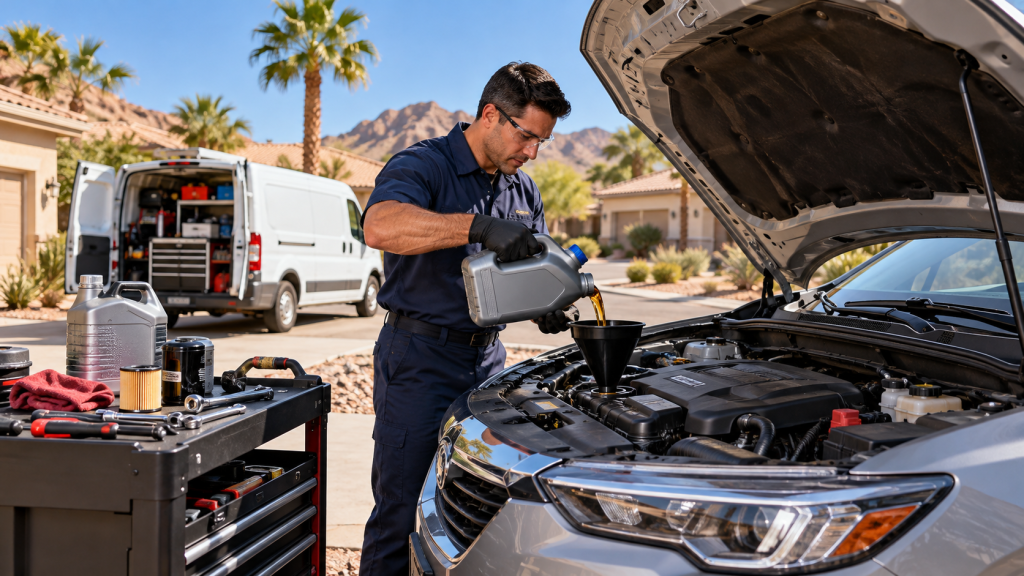
Ask ten drivers how often to change the oil, and you may get ten different answers. Some swear by a number they learned years ago, others wait for a sticker or a light, and plenty simply forget until something sounds wrong. The truth is that the right timing depends on your vehicle, the oil you use, and how you drive. The good news is that your car gives you several ways to tell. This guide explains the signs you need an oil change, why the old rule of thumb no longer fits every car, how to find the right schedule for yours, and how a mobile oil change in Austin can take care of it at your home or workplace.
Why Oil Changes Matter
Engine oil does several jobs at once. It lubricates moving parts so they do not grind against each other, carries heat away from hot spots, keeps the engine clean by holding tiny particles in suspension, protects against rust and corrosion, and helps seal the gaps between pistons and cylinder walls. Over time, heat and use break the oil down, and it collects dirt, moisture, and fuel byproducts. Old oil cannot do its job as well, which means more friction, more heat, and more sludge. Changing the oil and filter on schedule is one of the simplest and most effective ways to protect an engine.
Is the Old Three Thousand Mile Rule Still True?
For many years, the common advice was to change oil every three thousand miles. That rule came from a time when engines and oils were less advanced. Modern engines are built to tighter standards, and modern oils, especially synthetic oils, resist breakdown much better. As a result, many manufacturers now specify longer intervals. However, there is no single number that fits every car. The interval depends on the engine, the type of oil, and your driving conditions, so the best source is always your owner’s manual and any oil life monitor your vehicle has. Following a rule from decades ago can mean changing oil too often for some cars and too late for others.
Where to Find the Right Schedule for Your Car
- Your owner’s manual, which lists the recommended interval and the oil type and viscosity your engine needs
- The maintenance schedule in the manual, which often has separate entries for normal and severe driving
- The oil life monitor in the dashboard or information display, found on many newer vehicles
- The service reminder light or message, which comes on when the system calculates that service is due
- The records or sticker from your last oil change, which show when and at what mileage it was done
- A technician, who can advise based on your vehicle and how you use it
The manual often lists time as well as mileage, such as a mileage figure or a number of months, whichever comes first. Oil ages even when the car sits, so time matters for a vehicle that is driven only a little.
What Counts as Severe Driving?
Many owner’s manuals include a severe service schedule, which calls for more frequent changes. You may fall into this category more than you think. Conditions that are hard on oil include:
- Frequent short trips, where the engine never fully warms up and moisture builds up in the oil
- Stop and go traffic, with a lot of idling
- Extreme heat, which speeds up oil breakdown
- Towing or hauling heavy loads
- Dusty or dirty roads
- Aggressive driving or frequent high engine speeds
Austin drivers deal with hot summers and heavy traffic, so it is worth checking whether your manual’s severe schedule fits your habits. If it does, follow that schedule instead of the normal one.
Signs You Need an Oil Change
Beyond the schedule, the car itself offers clues. Pay attention to these signs:
The Oil Change or Service Light Comes On
This is the simplest signal. Many cars show a message or a light when the oil life monitor calculates that the oil is worn. Some systems need to be reset after each change. Do not ignore the reminder, and do not confuse it with the oil pressure warning light, which is more urgent, as described below.
Dark, Dirty, or Gritty Oil on the Dipstick
Check the oil on the dipstick using the method in your owner’s manual, with the car on level ground. Fresh oil is usually amber or light brown and fairly clear. Oil can also darken quickly, since it cleans the engine, so color alone is not a reliable guide. But oil that is very dark and thick, feels gritty between your fingers, or has a sludgy look is a sign that it is time. Milky or foamy oil can point to a different problem, such as coolant leaking into the oil, and should be checked by a professional.
A Low Oil Level
Engines use some oil, and a level that is a little low can be topped off using the type your manual specifies. But a level that keeps dropping can mean a leak or oil consumption, and it should be looked at. Running with too little oil is one of the fastest ways to damage an engine.
Louder Engine Noise
Oil quiets the engine by cushioning moving parts. As it wears or runs low, you might hear ticking, knocking, or a louder, rougher sound, especially at startup or at idle. A change in engine noise is a good reason to check the oil promptly.
The Oil Pressure Warning Light
If the oil pressure light comes on while you are driving, treat it as urgent. Pull over safely, turn off the engine, and check the oil level once the engine has had a moment to settle. Driving without enough oil pressure can cause serious damage quickly. If the level looks fine and the light stays on, call for help instead of driving on. If your car will not start after a problem like this, our guide to the top 10 reasons your car won’t start and how to get back on the road covers other common causes.
A Burning Oil Smell or Blue Smoke
A burning smell can mean oil is leaking onto hot parts, and blue tinged smoke from the exhaust can mean oil is being burned inside the engine. Both are reasons to have the car inspected, and low oil is a risk until you do.
Oil Spots Under the Car
Dark brown or black spots on the ground where you park can mean an oil leak. Even a slow leak can lower the level over time, so it is worth finding the source.
Rough Running or Worse Fuel Economy
Old, thick oil makes the engine work harder, which can show up as sluggish performance or a drop in fuel economy. These signs are subtle and have many possible causes, but old oil is among them.
Other Warning Lights
Some vehicles show a warning when a sensor detects a problem with oil pressure or oil level. If a warning light or the check engine light comes on, check your owner’s manual for what it means, and have the cause diagnosed instead of assuming.
How to Check Your Oil Level
- Park on level ground and turn off the engine
- Wait a few minutes so the oil can drain back into the pan, or follow the timing in your manual
- Pull out the dipstick, wipe it clean, and put it back in fully
- Pull it out again and look at where the oil reaches between the marks
- Check the color and feel of the oil
- If the level is low, add the oil type your manual specifies a little at a time, and recheck
Some newer vehicles do not have a dipstick and use an electronic check instead, so check the owner’s manual for the right method. Be careful around a hot engine.
What Type of Oil Does Your Car Need?
Oil types include conventional, synthetic blend, full synthetic, and high mileage formulas, each in a range of viscosities. Your owner’s manual lists the viscosity and the performance standard your engine requires, and some engines require synthetic. Using the wrong oil can affect performance, wear, and in some cases a warranty. Using the right oil on the right schedule is the best protection.
What Happens During an Oil Change?
A proper oil change is more than draining and refilling. A technician typically warms the engine slightly, removes the drain plug and drains the old oil, replaces the oil filter, checks the drain plug and its washer, and refills with the correct amount and type of oil. They then check the level, look for leaks, reset the oil life monitor if the vehicle has one, and often do a quick look at other fluids, belts, hoses, and tires. Used oil and filters should be disposed of responsibly.
Other Maintenance That Often Goes With an Oil Change
An oil change is a good chance to look at other wear items, since a technician already has the hood up and a view of the car. Belts are one example. A cracked or glazed belt can squeal, slip, or fail, and it can leave you stranded. Our article on how often you should replace your serpentine belt explains what to look for and why age matters. Other items worth checking at the same time include the air filter, the cabin filter, the battery, the brakes, tire pressure and tread, and the levels of coolant, brake fluid, and washer fluid.
What Happens If You Put It Off?
Delaying an oil change does not usually cause an immediate breakdown, but the effects add up. Old oil loses its ability to protect, deposits and sludge form, parts wear faster, and the engine runs hotter. Over time, this can lead to costly repairs and shortened engine life. In severe cases, neglect can cause an engine to fail. Staying on schedule is a small cost compared with the damage it can prevent.
Can a Mobile Mechanic Do an Oil Change?
In many cases, yes. A mobile mechanic can come to your home or workplace in the Austin area, change the oil and filter with the type of oil your vehicle needs, and check the other fluids at the same time. That saves you a trip and a wait, and it lets you ask about oil types and schedules directly. Some vehicles have hard to reach filters, special procedures, or undercar shields that make the job harder to do on site, and a trustworthy technician will tell you honestly when that is the case. When you book, share your vehicle’s year, make, model, and mileage, along with the oil specification from your manual if you have it, so the right oil and filter are on hand.
Do Not Guess, Check
You do not have to rely on a sticker or a hunch. Read your manual, watch your oil life monitor, check the dipstick now and then, and pay attention to how the car sounds and runs. If you are not sure whether it is time, a quick check can tell you.
To learn more about our services, visit our homepage. If you would like an oil change at your location, reach out through our contact us page and we will come to you anywhere in the Austin area.